
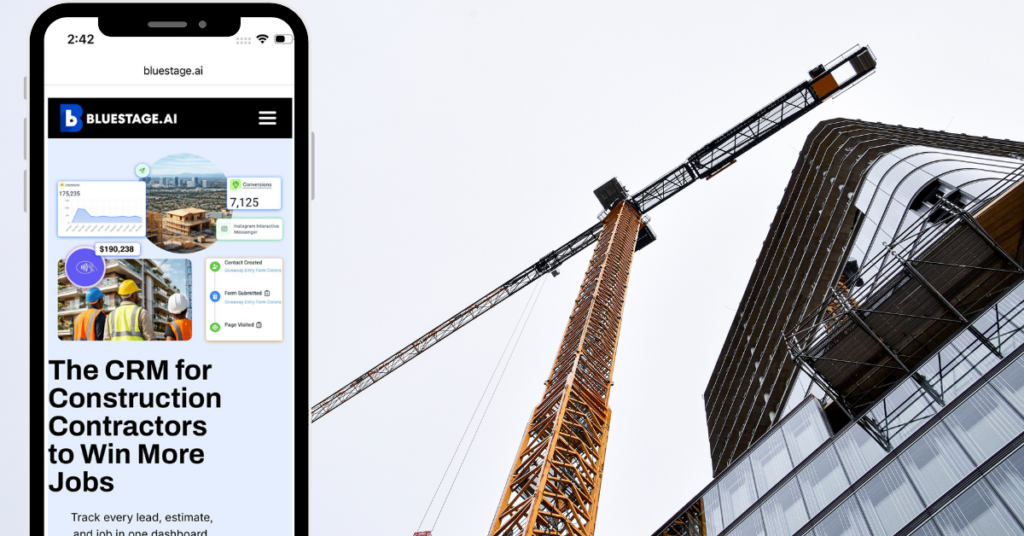
CRM for Construction Companies
A CRM for construction companies is software that helps contractors manage leads, bids, client communication, and project data in one place. It improves organization, speeds up sales, and reduces manual work, allowing teams to track opportunities, automate follow-ups, and convert more projects efficiently.
Why Construction Companies Need a CRM
Construction work is complex. You deal with leads, bids, timelines, and clients at the same time. Without a system, things slip through the cracks.
A CRM solves this problem. It keeps all client and project data in one place. As a result, teams stay organized and respond faster. Moreover, it reduces lost leads and missed deadlines.
Many contractors still rely on spreadsheets. However, that approach breaks down as the business grows. A CRM gives structure, visibility, and control.
Key CRM Impact on Construction Businesses
|
Area |
Without CRM |
With CRM |
|
Lead Tracking |
Manual, inconsistent |
Automated and centralized |
|
Bid Management |
Scattered documents |
Organized pipeline |
|
Client Communication |
Emails and calls spread out |
Unified communication history |
|
Project Visibility |
Limited updates |
Real-time tracking |
|
Revenue Growth |
Unpredictable |
Data-driven forecasting |
Core Features to Look For
Not all CRMs work for construction. You need tools built for how your team operates.
Mobile access is essential. Field teams must update progress, upload photos, and check job details on-site. Without this, adoption drops quickly.
Bid tracking is another key feature. It helps monitor deadlines and improve win rates. For example, you can see which proposals convert and why.
Integration also matters. Syncing with accounting tools reduces double entry. Therefore, invoicing becomes faster and more accurate.
Additionally, built-in quoting tools allow you to send professional estimates quickly. This speeds up the sales cycle and improves client experience.
These ideas align with industry best practices , but execution matters more than features alone.
How CRM Improves Project Management
A CRM does more than track leads. It connects your sales pipeline to actual projects.
When a deal closes, all data moves into the project phase. This includes timelines, budgets, and client details. As a result, teams avoid re-entering information.
Communication also improves. Everyone sees the same updates. Therefore, misunderstandings drop.
Meanwhile, managers gain better visibility. They can track progress, spot delays, and act early.
This connection between sales and execution is where most companies see the biggest gains.
CRM and Revenue Growth
Growth in construction often feels unpredictable. However, a CRM brings structure to your pipeline.
You can see how many leads come in, how many convert, and where deals stall. This clarity helps you fix weak points.
For example, if bids are not converting, you can adjust pricing or follow-up timing. Small changes often lead to big results.
Moreover, automation plays a huge role. Follow-ups, reminders, and updates happen without manual effort. As a result, no opportunity is forgotten.
Choosing the Right CRM
Not every CRM fits construction workflows. Many are built for general sales teams.
Look for systems that support project-based businesses. They should handle long sales cycles and complex deals.
Ease of use is critical. If your team avoids the system, it fails. Therefore, simple dashboards and mobile tools matter more than advanced features.
Customization is also important. Every construction company works differently. A flexible CRM adapts to your process instead of forcing change.
Platforms like BluestageAI focus on combining marketing, sales, and automation into one system. This approach reduces tool overload and simplifies operations.
Common Mistakes to Avoid
Many companies rush into CRM adoption. That often leads to failure.
First, choosing based on price alone is risky. Cheap tools may lack key features. In contrast, the right system pays for itself quickly.
Second, poor onboarding kills adoption. Teams need training and clear processes.
Finally, overcomplicating workflows creates friction. Start simple, then scale.
Avoiding these mistakes increases your chances of success.
What Happens After Implementation
A CRM is not just software. It changes how your business runs.
At first, there is a learning curve. However, within weeks, teams see improvements.
Leads respond faster. Projects stay organized. Revenue becomes more predictable.
Most importantly, decision-making improves. You no longer rely on guesswork.
FAQ Section
The biggest benefit is organization. A CRM centralizes leads, bids, and client data. As a result, teams respond faster and close more deals. It also reduces manual work and improves visibility.
Yes, and they should. Small teams benefit the most because they often lack structure. A CRM helps them compete with larger companies by improving efficiency.
Absolutely. It tracks bid deadlines, stores proposal data, and analyzes win rates. Therefore, companies can improve their bidding strategy over time.
It depends on the system and training. Simple platforms are easy to adopt. However, success requires clear processes and team buy-in.
It improves lead management and follow-ups. As a result, more opportunities convert into projects. It also provides insights to refine your sales process.