The Best CRM for Roofers to Organize Leads, Estimates, and Crews
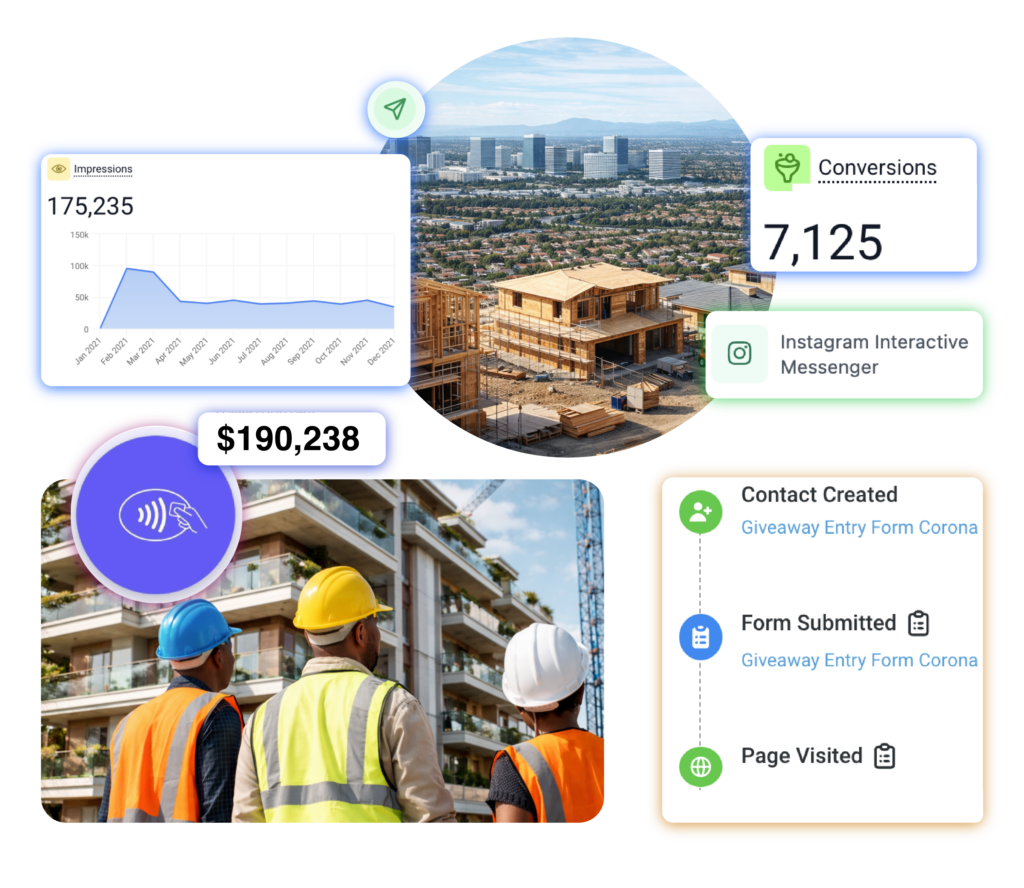
A CRM for roofers is software designed to help roofing companies track leads, manage estimates, schedule jobs, and automate follow-ups in one system. As a result, roofing contractors can close more jobs, organize their pipeline, and improve customer communication without relying on spreadsheets or scattered tools.
crm for construction orange county and united states
Tools with ONE!
Replace 0 +
Pre-built Templates
FREE 0 +
Hours Saved with Automation
0

CRM for Roofers: CRM for Roofers: The Complete Guide for Roofing Contractors

Roofing companies handle dozens of moving parts daily. Leads come from calls, ads, and referrals. Meanwhile, crews need schedules, estimates must be tracked, and customers expect quick responses. Without a centralized system, many opportunities slip through the cracks. A CRM built for roofing contractors solves this problem. Instead of juggling notes, emails, and spreadsheets, everything lives inside one organized platform. Consequently, roofers can see every lead, job, and payment stage from the first call to the final invoice.

What Is a CRM for for Plumbers
for Roofers?
A CRM for roofers is a customer relationship management system designed specifically for roofing businesses. Unlike generic CRM software, roofing CRMs focus on estimates, job scheduling, pipeline tracking, and follow-ups.
For example, when a homeowner requests a roof inspection, the CRM records the lead. Then it tracks every step of the sales process. This includes inspections, estimates, approvals, scheduling, and payment milestones. As a result, roofing companies always know where each job stands. Additionally, team members can view the same information in real time. Therefore, sales teams, office staff, and crews stay aligned throughout the project lifecycle.

Why Roofing Companies Need a CRM

Many roofing businesses grow quickly. However, operational systems often lag behind growth. Initially, contractors rely on spreadsheets, phone notes, and memory. While this may work for a small operation, it becomes chaotic as lead volume increases. A CRM changes this by centralizing operations. For instance, every lead enters the system automatically. Meanwhile, reminders ensure estimates are followed up on. As a result, fewer potential customers disappear. Furthermore, managers gain visibility into the entire pipeline. They can instantly see pending estimates, scheduled projects, and completed jobs. This level of visibility dramatically improves decision-making.

All the Tools Inside the Bluestage Platform

Customer / Audience CRM

Organize leads in one secure, multi-lingual software. Create profiles, and track activity like never before.

Email Marketing

Design emails that people actually want to open. Done-for-You templates that are tested to increase Click Through Rate.

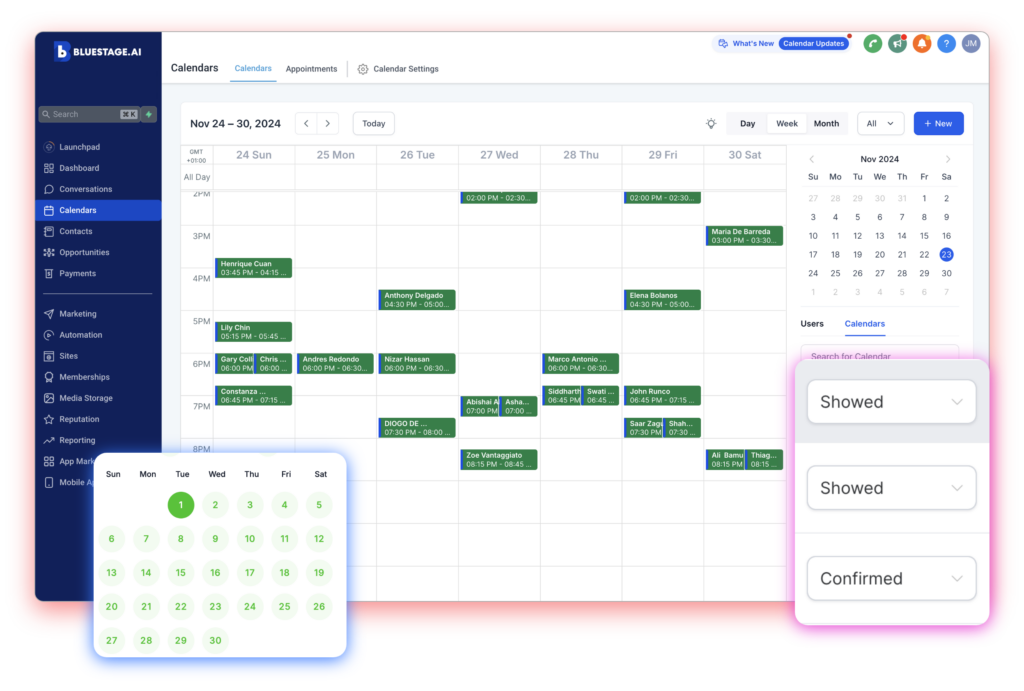
Calendar Scheduler

It's smart scheduling, seamless coordination with unlimited calendars, and automation.

SMS Bulk Text Blaster

Connect with your audience instantly through 2-way bulk SMS text messaging.

WhatsApp Bulk Sender

Enable WhatsApp messages for your audience - send to thousands instantly.

Sales Funnels

Streamline your sales funnels with automated lead capturing and follow-ups.

Workflow Automation

Automate tasks that take you time - lead follow-ups, reminders - ALL AUTOMATED

Landing Pages

Design landing pages or websites that convert traffic into leads.

Online Courses

Launch online courses while collecting payment upfront, or simply create subscriptions.

Surveys & Forms

Turn every interaction into an opportunity with branded Forms + Surveys for lead capturing.

Chatbot 24/7

Chatbot is a live, 24/7, smart, always-on chatbot that enhances support, captures leads, and streamlines bookings—automatically.

Tracking & Analyrics

Track and analyze your marketing campaigns, giving you a roadmap on what is working and what needs improvement.

How a CRM for Roofers Improves Lead Management​

How a CRM for Roofers Improves Lead Management

Lead response time directly affects roofing sales. In fact, homeowners often contact several contractors before making a decision. Therefore, the first company to respond often wins the job. A roofing CRM speeds up this process. When a new lead arrives, the system captures the contact information automatically. Immediately afterward, automated messages can acknowledge the request. Consequently, prospects receive a quick response even before a sales rep calls them. Moreover, the CRM keeps every interaction recorded. Phone calls, emails, and messages remain organized within the customer’s profile. This ensures no conversation gets lost.

Tracking Estimates and Job Pipelines

Roofing companies handle dozens of estimates every week. Without organization, it becomes difficult to track which quotes were approved.

A CRM solves this problem by visualizing the sales pipeline.

For example, roofing companies can categorize jobs into stages such as:

  • New lead
  • Inspection scheduled
  • Estimate sent
  • Approved job
  • Job scheduled
  • Completed project

As a result, managers can immediately see how many deals are close to closing.

Furthermore, this pipeline visibility helps predict future revenue.

Automating Follow-Ups With Roofing Customers

Many roofing jobs are lost simply because contractors forget to follow up. Homeowners often review estimates for days or weeks. During that time, consistent communication increases trust. A CRM automates these follow-ups. For instance, after sending an estimate, the system can automatically send reminders. These may include text messages, emails, or appointment confirmations. Consequently, roofing companies stay top-of-mind without spending extra time manually messaging customers. Automation therefore improves both efficiency and close rates.

Scheduling Roofing Crews Efficiently

Scheduling is another common challenge for roofing companies. Projects depend on weather, crew availability, and material deliveries. Without a centralized calendar, scheduling mistakes happen easily. A CRM solves this by connecting jobs to scheduling tools. Once a job is approved, it moves directly into the schedule. Meanwhile, crews can view their assignments and timelines. Therefore, office staff and field teams stay coordinated. Additionally, automated reminders ensure everyone knows when projects begin.

Why Contractors Use Bluestage CRM

Some CRM systems are built for generic sales teams. However, roofing companies need tools tailored to contractor workflows. Bluestage was designed specifically for construction businesses. Instead of forcing contractors to adapt to complicated software, the platform mirrors how roofing companies already operate. For example, Bluestage allows contractors to: Track leads, estimates, and jobs in one dashboard Automate follow-ups through text and email Send reminders for invoices and inspections Organize communication in a single customer profile As a result, contractors replace scattered tools with one centralized system. This creates operational clarity.

Key Features of a Modern CRM for Roofers

Modern roofing CRMs include tools that improve both sales and operations.

Below are the most impactful features.

Lead and Customer Management

First, the CRM stores every customer profile. Contact details, job history, and conversations remain accessible to the entire team.

Consequently, roofing companies maintain stronger customer relationships.

Workflow Automation

Automation reduces repetitive tasks. For example, follow-ups, reminders, and appointment confirmations can run automatically.

Therefore, office staff spend less time on manual work.

Marketing Tools

Many roofing CRMs include email marketing and SMS communication. These tools help companies nurture leads and encourage referrals.

Meanwhile, automated campaigns keep past customers engaged.

Analytics and Reporting

Data insights reveal what is working. Roofing companies can analyze lead sources, close rates, and campaign performance.

As a result, marketing decisions become data-driven.

What Changes After Implementing a Roofing CRM

When a roofing company adopts a CRM, operational clarity improves quickly. First, lead response becomes faster. Automated messages acknowledge new inquiries instantly. Second, sales pipelines become visible. Managers can see exactly how many estimates are pending or approved. Third, follow-ups happen consistently. Consequently, more estimates convert into signed contracts. Finally, internal communication improves. Teams share the same data instead of relying on memory. Over time, this structure creates predictable growth.

How to Choose the Best CRM for Roofers
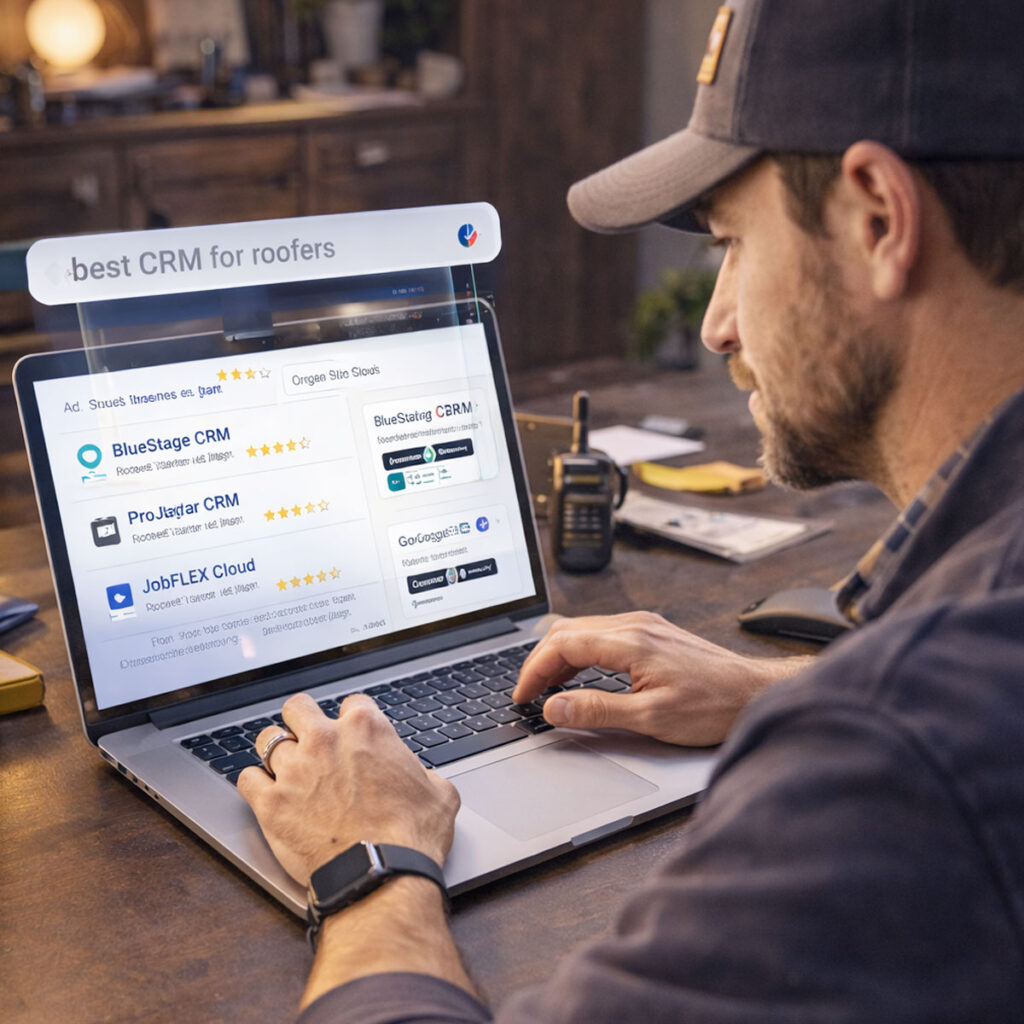
Not every CRM works well for roofing contractors. Before selecting software, roofing companies should evaluate several factors. First, the CRM must support construction workflows. Generic sales CRMs often lack job tracking and scheduling features. Second, automation capabilities are critical. Follow-ups, reminders, and lead capture should run automatically. Third, ease of use matters. Field teams and office staff should learn the system quickly. Finally, scalability is important. The platform should grow alongside the roofing company. Choosing the right CRM therefore prevents future operational bottlenecks.

Contractors use Bluestage to replace spreadsheets, sticky notes, and scattered apps with one organized system. Get Started Today.

The result:


FAQs for
CRM for Roofers

A CRM for roofers is software that helps roofing companies track leads, manage estimates, schedule jobs, and organize customer communication. As a result, contractors can manage their entire sales pipeline in one system while improving follow-ups and job visibility.
A roofing CRM improves sales by capturing every lead and ensuring consistent follow-ups. Additionally, faster response times help roofing contractors reach customers before competitors. Consequently, more estimates convert into signed roofing projects.
Yes. Even small roofing companies benefit from CRM software. As lead volume grows, tracking conversations and estimates becomes difficult without a centralized system. Therefore, a CRM prevents missed opportunities and keeps operations organized.
Important features include lead tracking, job pipeline management, automated follow-ups, scheduling tools, and customer communication history. Additionally, analytics and marketing automation can help roofing companies understand which strategies generate the most leads.
Yes. A roofing CRM replaces spreadsheets by organizing leads, jobs, and communication inside one platform. As a result, contractors avoid scattered data and gain clear visibility into their entire sales pipeline.