CRM for Plumbers: Manage Leads, Crews, and Jobs in One Dashboard
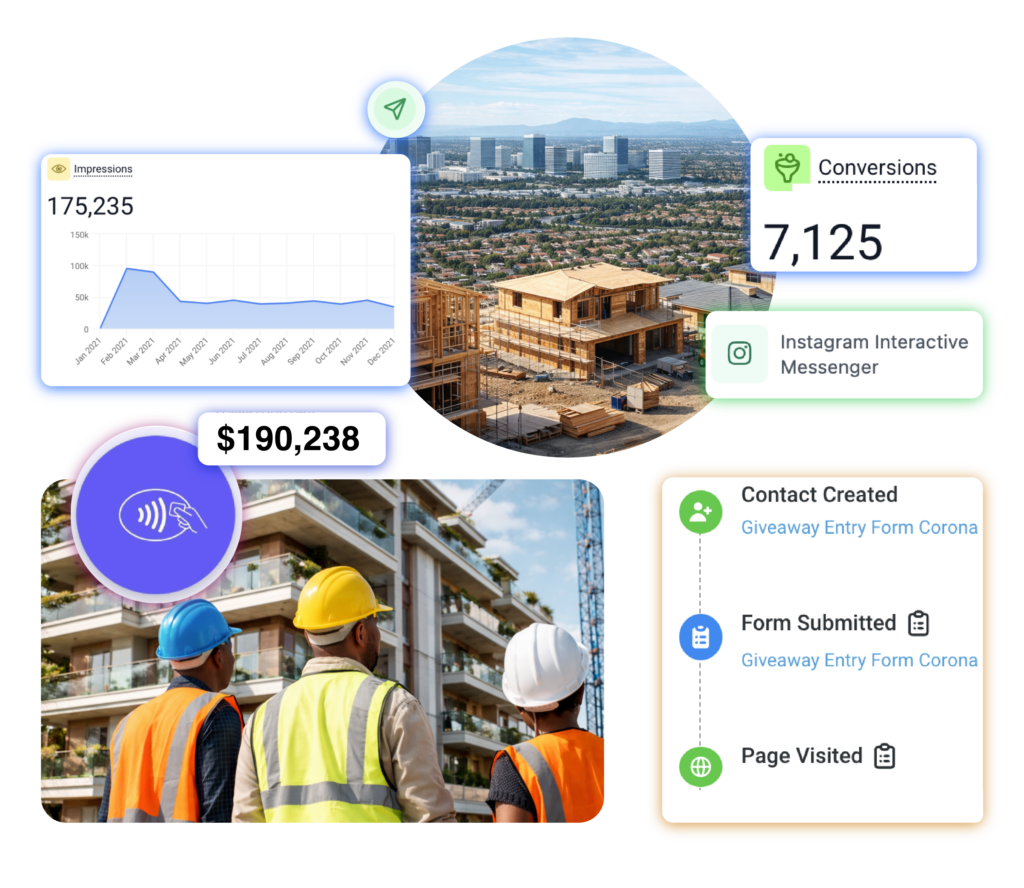
A CRM for plumbers is software that helps plumbing companies manage customer information, track leads, schedule jobs, send estimates, automate follow-ups, and organize their entire sales pipeline. Instead of using spreadsheets or scattered apps, plumbers use a CRM to keep every job, customer, and task visible in one system.
crm for construction orange county and united states
Tools with ONE!
Replace 0 +
Pre-built Templates
FREE 0 +
Hours Saved with Automation
0

Why Plumbing Businesses Need a CRM
Many plumbing companies grow quickly, yet their internal systems stay manual. Initially, spreadsheets and notebooks seem sufficient. Over time, however, those systems begin to break down. For example, a dispatcher may forget to follow up with a homeowner who requested an estimate. Meanwhile, technicians might arrive at jobs without complete customer history. Consequently, the business loses revenue and efficiency. A CRM solves this problem by organizing everything in one place. Instead of switching between multiple tools, plumbing teams manage leads, customers, and jobs within a single platform. Additionally, a CRM provides real-time visibility. Owners can instantly see which estimates are pending, which jobs are scheduled, and which invoices remain unpaid.

How a CRM for for Plumbers
Organizes the Entire Sales Pipeline

The biggest advantage of a CRM is pipeline visibility. Plumbing businesses often juggle dozens of jobs simultaneously, and without clear tracking, opportunities slip through the cracks.

A CRM organizes every stage of the sales process:

  1. Lead Capture – Calls, website forms, and referrals enter the system automatically.
  2. Customer Qualification – Staff record the customer’s problem and service request.
  3. Estimate Creation – Quotes are generated and sent quickly.
  4. Follow-Up Automation – Reminders are sent if customers do not respond.
  5. Job Scheduling – Approved estimates move into the schedule.
  6. Completion & Payment Tracking – The job closes when the invoice is paid.
  7. Because every stage is visible, plumbing companies avoid confusion. Furthermore, managers can quickly identify stalled estimates and re-engage potential customers.
Every inquiry should create a customer profile automatically. The CRM stores phone numbers, addresses, service history, and notes from previous visits. Consequently, technicians arrive prepared with full context about the customer.
Plumbing companies frequently lose revenue because estimates go unanswered. A CRM tracks every quote and shows whether it is pending, accepted, or declined. Additionally, automated reminders encourage homeowners to respond faster.
Speed often determines whether a plumbing company wins a job. Therefore, automation plays a crucial role. For example, text reminders can follow up with homeowners who received estimates. Meanwhile, email confirmations ensure appointments are remembered.
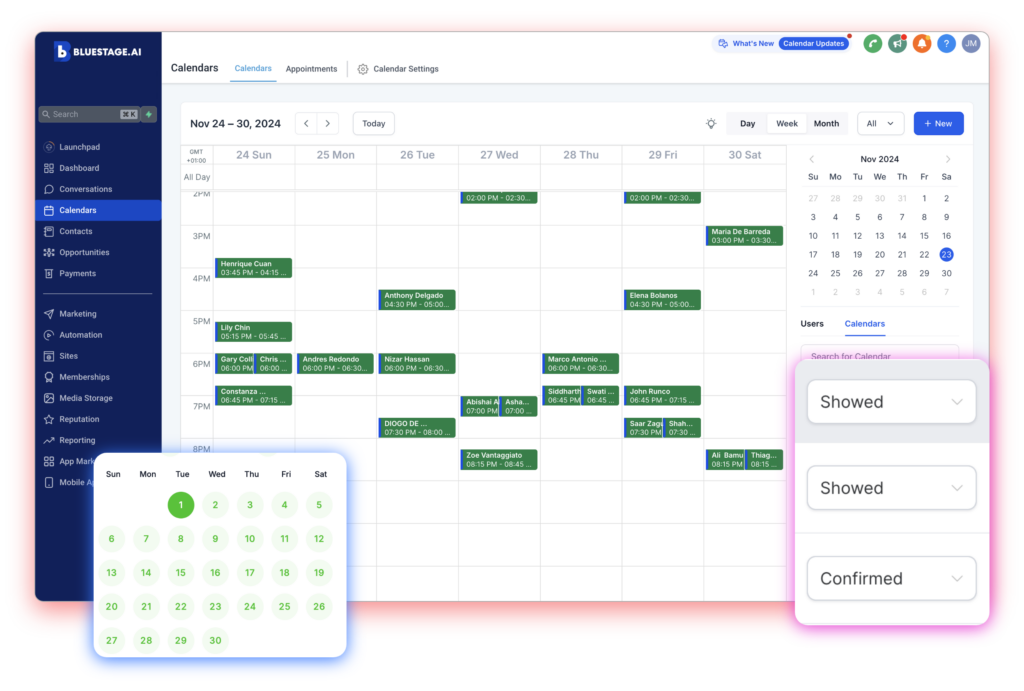
Scheduling conflicts waste valuable technician time. A CRM calendar allows dispatchers to assign jobs efficiently while preventing double bookings. As a result, crews operate more smoothly throughout the day.
Customer communication often happens across phone calls, emails, and texts. Without tracking, important conversations disappear. However, a CRM logs every interaction so teams can easily reference past discussions.

Key Features Every CRM for Plumbers Should Include

Not all CRM systems are built for service industries. Generic tools often lack the features plumbers need for daily operations.

Therefore, a strong plumbing CRM should include industry-specific capabilities.
All the Tools Inside the Bluestage Platform

Customer / Audience CRM

Organize leads in one secure, multi-lingual software. Create profiles, and track activity like never before.

Email Marketing

Design emails that people actually want to open. Done-for-You templates that are tested to increase Click Through Rate.

Calendar Scheduler

It's smart scheduling, seamless coordination with unlimited calendars, and automation.

SMS Bulk Text Blaster

Connect with your audience instantly through 2-way bulk SMS text messaging.

WhatsApp Bulk Sender

Enable WhatsApp messages for your audience - send to thousands instantly.

Sales Funnels

Streamline your sales funnels with automated lead capturing and follow-ups.

Workflow Automation

Automate tasks that take you time - lead follow-ups, reminders - ALL AUTOMATED

Landing Pages

Design landing pages or websites that convert traffic into leads.

Online Courses

Launch online courses while collecting payment upfront, or simply create subscriptions.

Surveys & Forms

Turn every interaction into an opportunity with branded Forms + Surveys for lead capturing.

Chatbot 24/7

Chatbot is a live, 24/7, smart, always-on chatbot that enhances support, captures leads, and streamlines bookings—automatically.

Tracking & Analyrics

Track and analyze your marketing campaigns, giving you a roadmap on what is working and what needs improvement.

How Automation Improves Plumbing Business Efficiency​

How Automation Improves Plumbing Business Efficiency

Automation is one of the most powerful benefits of CRM technology. Plumbing businesses spend significant time performing repetitive administrative tasks. However, a CRM can automate many of these processes. For instance, the system can send appointment reminders automatically. Likewise, follow-up messages can be triggered after estimates are delivered. As a result, staff spend less time on manual communication and more time focusing on customer service. Furthermore, automation ensures consistency. Every lead receives timely follow-ups, which dramatically improves closing rates.

The Impact of CRM Software on Plumbing Revenue

Many plumbing companies adopt CRM systems primarily for organization. Surprisingly, the biggest impact often appears in revenue growth. Several factors contribute to this improvement. First, faster responses increase the likelihood of winning jobs. Customers frequently choose the first plumber who responds to their request. Second, consistent follow-ups prevent lost opportunities. Many homeowners simply forget to respond to estimates. Finally, improved customer experience leads to repeat business and referrals. When communication is smooth, customers are far more likely to recommend the company. Consequently, CRM systems often pay for themselves quickly through increased job volume.
The Impact of CRM Software on Plumbing Revenue

How Platforms Like Bluestage Support Plumbing Operations​

How Platforms Like Bluestage Support Plumbing Operations

Some CRM platforms are designed specifically for contractors and home service businesses. These systems focus on the operational challenges service companies face daily. For example, contractor-focused platforms like Bluestage combine CRM functionality with automation tools, scheduling systems, and marketing features. Instead of using separate apps for communication, scheduling, and lead tracking, plumbing businesses can manage everything in one system. Additionally, automated follow-ups help ensure no estimate is forgotten. Meanwhile, job pipelines provide a clear view of pending work, scheduled projects, and completed jobs. As a result, plumbing companies gain operational control while reducing administrative chaos.

Signs Your Plumbing Business Needs a CRM

Many business owners hesitate before implementing new software. Nevertheless, certain warning signs indicate that a CRM is necessary. Missed leads are the most obvious signal. If calls or website inquiries are not consistently tracked, revenue is being lost. Another sign is disorganized scheduling. When technicians arrive late or jobs overlap, the system needs improvement. Additionally, slow follow-ups often reduce closing rates. A CRM ensures every estimate receives proper attention. Finally, scattered communication across multiple apps creates confusion. Centralizing customer interactions resolves this issue quickly.
Signs Your Plumbing Business Needs a CRM​
The Future of CRM for Plumbers​

The Future of CRM for Plumbers

Technology continues to transform service industries. As a result, CRM systems are becoming more intelligent and automated. Artificial intelligence is beginning to analyze customer data and predict service opportunities. For example, systems may recommend follow-ups for aging water heaters or seasonal maintenance reminders. Meanwhile, automation will continue reducing administrative work. Dispatching, communication, and customer management will increasingly run through centralized platforms. Consequently, plumbing businesses that adopt CRM systems early will gain a strong operational advantage.

Contractors use Bluestage to replace spreadsheets, sticky notes, and scattered apps with one organized system. Get Started Today.

The result:


Frequently Asked Questions for
CRM for Plumbers

A CRM for plumbers organizes customer data, service history, estimates, and job scheduling in one platform. It also tracks leads and automates follow-ups, helping plumbing companies respond faster and close more jobs.
Plumbing businesses receive many service inquiries daily. A CRM ensures these leads are tracked properly. Additionally, it helps teams manage schedules, store customer history, and automate communication with homeowners.
Yes. CRM software improves closing rates by tracking every estimate and sending automated follow-up messages. Consequently, homeowners are reminded to respond, which significantly increases job conversions.
Most modern CRM platforms are designed for ease of use. After setup, teams simply log leads, schedule jobs, and track estimates through a central dashboard. Many systems also provide automation that reduces manual work.
Plumbers should look for lead tracking, estimate management, job scheduling, automated follow-ups, and communication logging. These features ensure the system supports both operational efficiency and customer relationship management.